Every local business owner eventually hits the same wall. You know you need more visibility online, but the path forward feels like a coin flip between options that all promise results and none of them come with a guarantee attached to your specific situation.
Direct Answer
Local SEO, paid advertising, and DIY digital marketing each suit different business situations. Local SEO builds durable, compounding visibility over months but requires real technical depth to execute correctly. Paid ads deliver fast traffic with immediate budget control but stop the moment you stop paying. DIY only works when your market is genuinely low-competition and your time truly has no better use.
Key Takeaways
- Local SEO is the only channel that compounds over time; paid traffic disappears the moment your budget does
- Google Ads and Local Service Ads are the right call when you need leads within days, not months
- DIY digital marketing carries a hidden cost most owners never calculate: the opportunity cost of doing it wrong for months before realizing it
- Your Google Business Profile is the single highest-leverage free asset in local search, but real optimization requires far more than filling in your address
- A pay-per-result SEO model removes the financial risk of the waiting period that kills most SEO campaigns
Why Do So Many Local Businesses End Up With a Patchwork Strategy That Doesn't Work?
The root problem isn't a shortage of options. It's a shortage of a decision framework.
Most local businesses end up scattered because each channel gets evaluated in isolation, at the moment someone pitches it. You run a Facebook ad because someone said social media works. You try Google Ads for a month, don't see the return you expected, and cut the budget.
You read about SEO and start a blog that gets abandoned after three posts.
None of these fail because the channel is wrong. They fail because the channel was chosen without a clear picture of what the business actually needed at that specific stage.
The channel isn't the strategy. Your current business situation determines which channel is the right one. That's the distinction most digital marketing articles skip entirely.
What's Actually Happening Under the Hood: How Each Channel Works
Before you pick a path, you need to understand the mechanism behind each option, not just the promise attached to it.
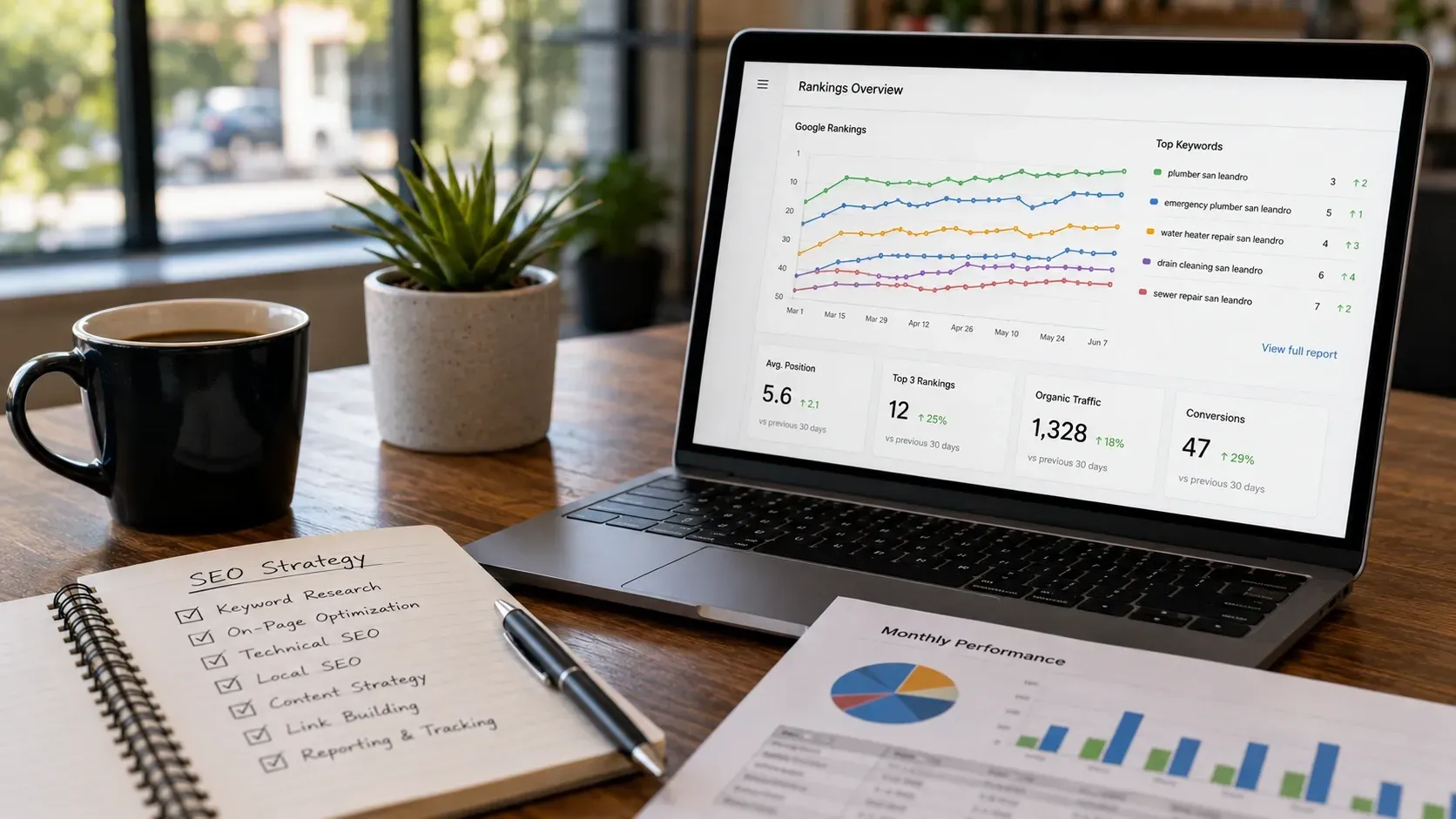
Local SEO is the process of earning placement in geographically relevant search results, including the Google Map Pack and organic listings, when someone nearby searches for what you offer. Google's algorithm weighs proximity, relevance, and prominence. Prominence gets built through consistent citations, quality backlinks, review volume, and on-page signals. None of those happen overnight. Expect three to six months before meaningful ranking movement, and six to twelve months before you feel the compounding effect where new rankings generate new traffic that generates new reviews that generate more rankings.
Paid advertising through Google
,
Local Service Ads
, and
Facebook advertising
works on a completely different mechanism. You're buying placement, not earning it. The moment your campaign goes live, you're visible. The moment it's paused, you're not. That's not a flaw in the channel. That's the design. For businesses that need leads this week, it's the right design.
DIY digital marketing means you're attempting both of the above yourself. The hidden cost isn't the tools or the time spent learning them. It's the learning curve running parallel to your actual business operations. A dentist in Walnut Creek spending eight hours a week trying to figure out Google Search Console is not doing dentistry. That trade-off compounds in both directions, and the compounding runs against you.
The Channel Selection Framework: Matching Your Situation to the Right Path
Use this framework to match your situation to the right channel based on four variables: time horizon, budget tolerance, competitive pressure, and your current online presence.
| Your Business Situation
|
Acting With UPM Digital Media
|
Going It Alone or Doing Nothing
|
| New business, no online presence
|
Foundation built correctly from day one: Google Business Profile, citations, and site structure done in the right sequence
|
Foundation built by trial and error; technical mistakes created early take months to untangle later
|
| Established business, needs leads now
|
Paid campaigns launched against a properly optimized destination so every click has a real chance to convert
|
Paid spend drives traffic to a site or profile that isn't ready to convert, accelerating losses rather than gains
|
| Competitive market (legal, dental, HVAC in the Bay Area)
|
Local SEO builds long-term dominance while paid bridges the gap during the build phase
|
Neither channel gets done well; the competitor who invested in both six months ago is already widening the gap
|
| Strong SEO but low review count
|
Reputation management added as the trust layer that turns visibility into actual calls
|
Ranking well but losing conversions to a competitor with two hundred reviews and a 4.7-star average
|
| DIY plateau: you've tried and it's stalled
|
Dedicated account manager diagnoses exactly where the gap is and builds from there
|
The plateau continues; you keep investing time in an effort that isn't moving the needle
|
This table isn't a ranking of channels by quality. It's a map of fit. The wrong channel executed perfectly still produces the wrong result.
Doesn't Paid Advertising Just Work Faster? Why Not Always Start There?
It's the most common question, and it deserves a direct answer.
Paid advertising does work faster. That's true. But "faster" and "better" aren't the same thing, and for most local businesses, running paid ads without a solid organic foundation is like pouring water into a bucket with a hole in it.
Here's the mechanism: a user clicks your Google Ad, lands on your website, and the first thing they do is check your reviews. If you have fourteen reviews with a 3.8-star average and your competitor has two hundred reviews with a 4.7-star average, you paid for that click and lost the customer anyway. The ad didn't fail. The trust infrastructure wasn't there to catch the lead.
This is why sequence matters more than channel.
Consider a typical situation in any competitive Bay Area market. A home services company is running paid Google Ads monthly and watching their cost-per-lead climb steadily over time. The issue usually isn't the ad copy or the bid strategy. It's that their
Google Business Profile
hasn't been fully optimized, their website loads slowly on mobile, and their most recent review is months old. The ads are driving traffic to a destination that isn't built to convert. Adding more budget doesn't fix any of those problems. It just gets more people to a destination that loses them.
Paid ads amplify what's already working. They don't repair what's broken.
The Contrarian Truth About DIY Local SEO
Here's the claim most agencies won't make because it sounds like self-interest: DIY local SEO isn't cheaper. It's differently expensive.
The math most business owners don't run: if you spend ten hours a week on digital marketing tasks that produce no measurable result for six months, you haven't saved the cost of an agency. You've spent hundreds of hours of your own time, delayed your results by half a year, and potentially created technical problems (duplicate listings, incorrect business data, over-optimized anchor text) that a professional now has to clean up before they can move forward.
Bad local SEO advice doesn't announce itself. It arrives dressed as confidence, backed by jargon.
DIY works when your market has genuinely low competition and you already have the technical knowledge to execute correctly. In most Bay Area markets, from Oakland to Santa Clara to Marin County, neither of those conditions holds. The competition is real, and the technical requirements for ranking in a dense local market are not beginner-level tasks.
The most expensive move in local marketing isn't hiring an agency. It's waiting six months to discover that your DIY effort wasn't moving the needle, then starting from scratch with ground you've already lost.
What Does Working With the Right Agency Actually Look Like?
The way the work gets done matters here, because it isn't a template dropped on every client.
The team behind UPM Digital Media was built around one principle: every market is different, and every business within that market is different. Growth-driven local marketing experts reside in almost every single state across the country, which means your account isn't being managed by someone who has never heard of your neighborhood. Every client is paired with a dedicated account manager who starts by understanding the specific business, its goals, its target market, and the competitive landscape it operates in.
From that foundation, a customized strategy gets built. Depending on what the situation calls for, that could mean
pay-per-result SEO
,
reputation management
, paid advertising,
website optimization
,
business listings and voice search
,
conversion rate improvements
, or a sequenced combination of several. The mix is determined by the gap, not by a pre-built package.
The pay-per-result SEO model is built specifically around timeline reality. You pay between $650 and $950 per month when your business ranks on the first page of Google for your chosen search terms. If you don't rank, you don't pay. That structure removes the "trust me, it's working" problem that makes most SEO relationships feel like a black box.
Free 30-minute consultations are available Monday through Friday from 9:00 AM to 5:00 PM Pacific. Reach the team at 415-731-9764 or toll-free at 888-449-3239.
Who Is This Most Important For?
Straight talk: the value of a full digital marketing engagement scales with what's at stake in your market.
If your business operates in a hyper-niche with no meaningful local competition and you already rank on the first page for your primary terms, what you need is maintenance, not transformation.
If your business is pre-revenue and you haven't yet clarified who your customer is, no marketing channel will fix a positioning problem. Get clarity on your offer first, then build visibility around it.
And if you're expecting local SEO results within the first two weeks without any paid component, the mechanism doesn't support it. Anyone who tells you otherwise is selling you something the channel can't produce. Honest timelines aren't a weakness. They're how you tell the difference between a real strategy and a pitch.
What UPM Digital Media addresses well is the situation most local Bay Area businesses actually face: you have a real business, real customers, and real competition, but your online presence isn't reflecting any of that. You're losing searches you should be winning. That gap is fixable, but it takes the right combination of channels, executed in the right sequence, by people who know your specific market.
About the Author
Les Ong is a marketing consultant and entrepreneur specializing in helping small and medium-sized businesses compete with larger brands by applying high-end marketing technology typically reserved for big-budget companies. He founded UPM Digital Media and leads a team of growth-driven local marketing experts operating across nearly every U.S. state.
FAQ