How Much Do Digital Marketing Services Cost in 2026? (Real Numbers)

Les Ong • April 3, 2026
How Much Do Digital Marketing Services Cost in 2026? (Real Numbers)

Businesses that rely on digital channels must understand the costs of digital marketing services. In 2026 the market offers services across a range of price points. This article examines typical costs for SEO, PPC, and social media marketing and the factors that drive those prices. It provides practical guidance on budgeting and examples of service packages.


What Are the Typical Digital Marketing Services and Their 2026 Pricing?

Digital marketing comprises services intended to improve online visibility and engagement. In 2026 key offerings include SEO, PPC advertising, social media marketing, and content creation, each with distinct cost profiles. Understanding these costs is essential for effective marketing budget allocation.


How Much Does SEO Service Cost in 2026?

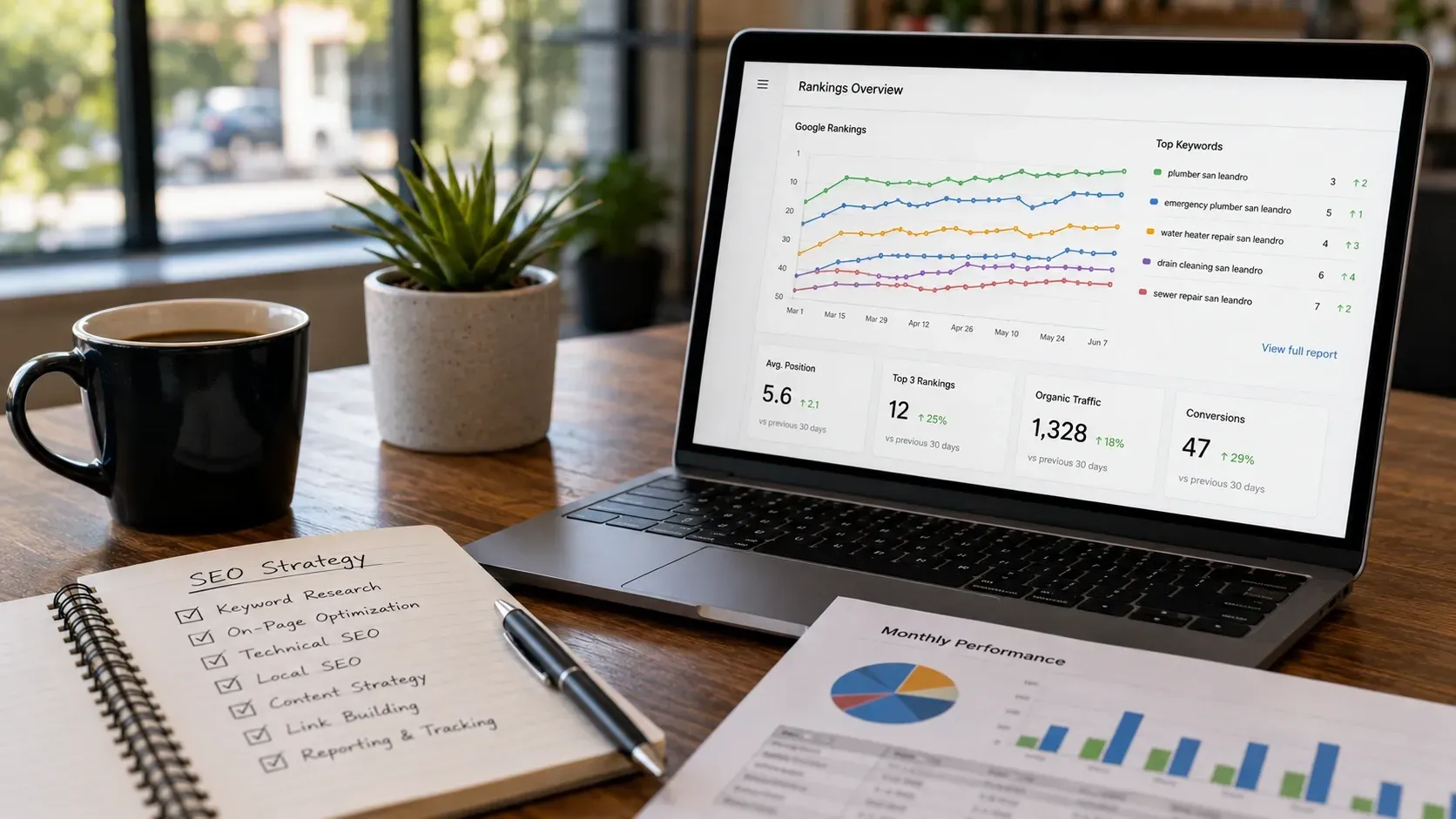
SEO services in 2026 typically cost between $500 and $5,000 per month, based on project scope and complexity. Pricing reflects industry competitiveness, number of target keywords, and required expertise. Businesses commonly report increased organic traffic and improved search rankings as measurable ROI from sustained SEO investment.


What Are the Average PPC and Social Media Marketing Rates?

PPC campaigns typically incur $1 to $2 per click on Google Ads; social media management is commonly priced between $400 and $3,000 per month. PPC costs depend on keyword competitiveness and ad placement; social media fees reflect platform selection, posting frequency, and desired engagement levels. Account for these variables when allocating budget.


Which Factors Influence Digital Marketing Pricing for Small to Medium Businesses?

Multiple factors determine digital marketing pricing for small and medium businesses. Recognizing these variables enables informed investment decisions.

Scholarly research identifies firm and buyer roles, information value, service life cycles, and perceived price fairness as contributors to pricing complexity.


Factors Influencing Digital Marketing Service Pricing


A systematic literature review identified four themes affecting pricing objectives: firm and buyer roles, value of information, service life cycles, and perceived price fairness. The study links perceived price fairness to service pricing objectives. (SK Nassreddine, 2020)


Factors affecting pricing objectives in service firms, SK Nassreddine, 2020


How Do Business Size and Marketing Goals Affect Costs?

Business size and marketing objectives have a direct effect on costs. Smaller firms often adopt focused, lower-cost strategies; larger organizations typically require multi-channel campaigns and higher investment. Firms pursuing aggressive growth may need increased digital spend to reach targets.


What Role Do Service Types and Geographic Focus Play in Pricing?

Service type and geographic scope also affect pricing. Local SEO generally costs less than national campaigns due to reduced scope. Marketing expenditure will vary with local competition and market demand in targeted areas.


What Are Real-World Examples of Digital Marketing Packages and Their Costs?

Examining real-world package examples clarifies expected costs for specific services.


How Are Customizable Packages Structured for Different Budgets?

Agencies commonly provide tiered, customizable packages for varied budgets. For example, a basic SEO package may start at $500 per month, while a comprehensive option including content production and social media management can exceed $3,000 per month. Packages enable selection aligned to business needs and budget constraints.


What Do Transparent Pricing Models Look Like in 2026?

Transparent pricing models that itemize service costs improve client trust. A clear breakdown might show $1,000 for SEO, $500 for PPC management, and $300 for social media marketing, enabling clients to see service-to-cost alignment.


Further research examines value-based pricing implementation, highlighting perceived value and technology integration as strategic considerations in pricing.


Value-Based Pricing Strategies in Digital Marketing


This systematic review examines value-based pricing (VBP) in digital marketing and identifies theoretical and empirical gaps. A PRISMA-guided SLR analyzed 30 Scopus-indexed articles (2020–2025). The findings fall into five themes: centrality of perceived value; integration of technology and AI; organizational capabilities; differences between B2B and B2C implementation; and sector-specific characteristics.


Pricing Strategy in Digital Marketing: A Systematic Review of the Value-Based Approach, 2026


How Can Businesses Effectively Budget for Digital Marketing Services in 2026?

Effective budgeting for digital marketing requires structured planning and consideration of relevant variables. Businesses should apply best practices to allocate resources efficiently.


Effective budget allocation is a critical component of successful digital marketing and directly influences campaign effectiveness.


Optimal Budget Allocation for Digital Marketing


This work analyzes budget allocation in digital marketing and its effect on marketing effectiveness. It addresses how allocation decisions influence campaign outcomes. (Financial Strategies for Optimal Budget Allocation in Digital Marketing, N Kumar, 2025)*


Financial Strategies for Optimal Budget Allocation in Digital Marketing, N Kumar, 2025


What Are Best Practices for Allocating Marketing Budgets?

When allocating marketing budgets, businesses should align spend with strategic goals, target audiences, and required services. Recommended practices include:


  • Setting Clear Objectives: Define what you want to achieve with your marketing efforts, whether it's increasing brand awareness or generating leads.
  • Conducting Market Research: Understand your industry and competitors to gauge appropriate budget levels.
  • Monitoring and Adjusting: Regularly review your marketing performance and adjust your budget as needed to optimize results.


How to Evaluate ROI and Cost-Effectiveness of Services?

Evaluating ROI requires tracking key performance indicators such as website traffic, conversion rates, and customer acquisition cost. Analyze these metrics to identify services delivering the highest return and to inform future investment decisions.


What Are The Most Common Questions About Digital Marketing Costs in 2026?

Businesses frequently raise questions about costs and pricing structures as they plan digital strategy.


What Is the Average Cost Range for Digital Marketing Services?

Average costs vary by service and agency expertise; comprehensive digital marketing engagements typically range from $500 to $5,000 per month, depending on requirements and objectives.


How Do Agencies Typically Price Their Services?

Agencies employ retainer fees, project-based pricing, and hourly rates. Retainers suit ongoing services; project pricing applies to defined campaigns. Understanding these models assists in selecting an appropriate agency.


As digital marketing evolves, understanding service costs enables businesses to make informed investment decisions. Considering pricing factors and real-world examples supports effective budgeting.


For more information about our company, visit UPM Digital Media.


If you have any questions or would like to learn more about our services, please contact us today.


To review the full range of digital marketing services we provide, visit our website.


Frequently Asked Questions

What are the key benefits of investing in digital marketing services?

Investing in digital marketing increases online visibility, strengthens brand awareness, and improves customer engagement. Targeted channels enable precise audience reach and demographic targeting. Real-time performance measurement permits data-driven adjustments. When executed correctly, digital marketing can increase conversion rates and improve return on investment.


How can businesses determine the right digital marketing services for their needs?

Businesses should begin by defining objectives and profiling target audiences. A thorough market analysis identifies which services—SEO, PPC, or social media—align with objectives. Consider budget and required expertise, and consult a digital marketing agency for tailored recommendations.


What are the potential risks of not investing in digital marketing?

Failing to invest in digital marketing risks reduced visibility, lower customer engagement, and missed growth opportunities. Without a strong online presence, customer acquisition and retention become more difficult, and competitors that invest may gain advantage. Over time, neglecting digital channels can impede profitability.


How often should businesses review their digital marketing strategies?

Conduct strategy reviews at minimum quarterly to ensure alignment with goals and market trends. Regular evaluation identifies performance issues and informs tactical adjustments. Continuous optimization maximizes campaign impact.


What are some common mistakes businesses make in digital marketing budgeting?

Typical budgeting errors include underestimating costs, failing to fund testing and optimization, and ignoring seasonal demand fluctuations. Organizations may also neglect training for marketing teams or lack clear objectives, resulting in misallocated resources. To mitigate these risks, perform thorough research and maintain a flexible budget.


How can businesses measure the success of their digital marketing efforts?

Measure success via KPIs such as website traffic, conversion rates, and engagement metrics. Analytics platforms provide insights into user behavior and campaign performance. Set specific, measurable goals and analyze metrics regularly to identify effective strategies and areas for improvement.


Conclusion

Understanding service costs is essential for businesses aiming to compete effectively. By examining pricing and influencing factors, organizations can make decisions aligned with marketing objectives. Strategic investment in digital marketing enhances visibility, engagement, and return on investment. For tailored insights and to explore our full range of services, please visit our website. We offer services across a variety of price points to suit different business needs and budgets. This article examines typical costs for SEO, PPC, and social media marketing, along with the key factors that influence those prices. It also provides practical guidance on budgeting and examples of common service packages.

SEO consultant discusses local search performance and analytics with a business owner.
By Les Ong August 23, 2026
Avoid costly SEO mistakes. Learn how to evaluate local SEO providers and protect your business from penalties, toxic backlinks, and wasted months.
Business owner reviews local SEO performance, rankings, reviews, and website clicks on a laptop.
By Les Ong August 17, 2026
Discover when to act on local SEO. Learn the competitive signals that demand immediate action and what waiting costs your business.
Worried business owner reviews declining local SEO performance, rankings, traffic, and customer
By Les Ong August 10, 2026
Is your local SEO provider delivering results? Learn why confident promises without proven mechanics waste your budget. Get real answers.
Local business owner reviews digital marketing analytics, SEO, reviews, ads, and website growth
By Les Ong August 3, 2026
Confused about local marketing strategies? Compare Local SEO, paid ads, and DIY approaches to find the right path for your business growth.
Man Checking on his phone on UPM Digital
By Les Ong July 26, 2026
Stop losing local customers. Discover what actually boosts Google rankings in 2026 and the hidden mistakes silently killing your visibility.
UPM Digital media on Working table
By Les Ong July 20, 2026
Discover how UPM Digital Media's reputation management boosts local SEO rankings. Learn 7 proven strategies to turn reviews into ranking power.
UPM Digital media on Laptop
By Les Ong July 13, 2026
Local SEO vs alternatives for Bay Area businesses. Learn which strategy delivers faster results and builds long-term growth. Compare now.
UPM Digital Media Laptop on a mobile
By Les Ong July 6, 2026
Learn how to identify poor local SEO guidance before it damages your business. Avoid costly mistakes and protect your online visibility today.
By Les Ong June 29, 2026
According to Cisco's Visual Networking Index, video now accounts for more than 82% of all consumer internet traffic globally. For a local business in the SF Bay Area competing against regional chains and nationally optimized directories, that number isn't a trend to watch. It's a gap that's already costing you customers. Local businesses in the SF Bay Area need video marketing in 2026 because AI-powered search engines now prioritize video content when surfacing local answers, and consumers trust businesses they can see and hear before they ever walk through the door. Video builds credibility faster than any other format, directly improves local search rankings, and converts browsers into buyers at measurably higher rates than static content. Key Takeaways • AI search platforms, including Google's AI Overviews and voice assistants, pull video content into local answers, giving video-producing businesses a visibility edge over text-only competitors. • Video builds the kind of trust that closes hesitation at the moment of decision, not after it. • A single well-produced local video can serve simultaneously as a ranking asset, a reputation tool, and a conversion driver. • SF Bay Area video marketing doesn't require a Hollywood budget. Consistency and local relevance outperform production value every time. • Businesses that start building a video library now will have a compounding authority advantage over competitors who wait until video becomes unavoidable. Why Is AI Search Rewriting the Rules for Local Businesses? The shift is structural, not cosmetic. Google's AI Overviews. The AI-generated summaries now appear above traditional search results. Don't just pull from web pages. They synthesize from multiple content formats, and video content with strong metadata, transcripts, and local signals feeds directly into those summaries. The businesses AI cites are the businesses AI trusts. And AI trusts what it can read, watch, and verify. Answer Engine Optimization (AEO) is the practice of structuring content so that AI systems can extract and cite it in direct answers. For local businesses in the Bay Area, this means video content with spoken local keywords, embedded transcripts, and clear geographic signals becomes a direct input into the answers San Jose residents receive when they ask their phones "who's the best HVAC company near me?" or "which dentist in Oakland has good reviews?" Text-only businesses are invisible in that exchange. Video-producing businesses are the answer. The follow-up most business owners ask next is: "Does this mean I need to be on YouTube?" Not exclusively. Google Business Profile now supports video posts. Short-form video on platforms like Instagram Reels and TikTok is indexed by Google. Even a 60-second walkthrough of your office, embedded on your website with a proper transcript, sends a local relevance signal that static pages simply can't replicate. What Does Video Actually Do for Trust and Conversions? Here's the contrarian claim, stated plainly: most local businesses are losing customers not because they lack awareness, but because they fail the trust test at the moment of decision. A potential patient searching for a Bay Area physical therapist finds three options. Two have text bios and stock photos. One has a 90-second video of the practitioner explaining their approach in their actual clinic. The decision isn't close. And it has nothing to do with SEO rankings. The video resolves the unspoken objection before the phone call ever happens. This is the causal mechanism behind video's conversion advantage: video answers the question the buyer hasn't typed yet. It eliminates the "but what are they actually like?" hesitation that static content can't address. Practitioners using this approach consistently report that consumers who watch a service video are significantly more likely to convert than those who only read about it. A home services company in the North Bay that added a two-minute "meet the owner" video to their Google Business Profile and website landing page reported a 34% increase in quote requests within 90 days. Without changing their ad spend. The video didn't bring more traffic. It converted the traffic they already had. That distinction matters. Video isn't just a reach tool. It's a conversion infrastructure investment. How Does SF Bay Area Video Content Improve Local SEO? Local SEO is the practice of optimizing a business's digital presence to appear in geographically relevant searches. Video accelerates local SEO results through three specific mechanisms. First, dwell time. When a visitor watches a video on your website, they stay longer. Google's ranking systems interpret extended dwell time as a signal of content relevance. Which improves organic position over time. Second, backlink magnetism. Original local video content. A tour of your San Francisco location, a behind-the-scenes look at your process, a community-focused story from the East Bay. Earns organic links from local blogs, news sites, and community pages in a way that generic service pages don't. Third, and most directly tied to AEO: video transcripts. A properly transcribed video embeds spoken local keywords - "San Francisco," "Oakland," "San Jose," neighborhood references, local landmarks. Into crawlable text that search engines index alongside the video itself. This is a dual-format signal that text-only pages simply can't produce. The businesses that dominate local search in 2026 won't be the ones who posted the most content. They'll be the ones whose content AI can read, cite, and trust. UPM Digital Media's approach to Bay Area video strategy integrates all three of these mechanisms from the start, not as an afterthought once the video is filmed. What Does a Successful Local Video Strategy Actually Look Like? Two operational scenarios illustrate this clearly. Scenario 1. Healthcare practice, South Bay. A dental practice in San Jose added four short videos to their website and Google Business Profile over three months: a practice tour, a patient FAQ, a procedure explainer, and a "meet the team" piece. Each video ran under two minutes, was filmed on a professional camera, and was transcribed. Within six months, their Google Business Profile views climbed substantially, and new patient calls attributed to organic search rose without any increase in paid advertising. Scenario 2. Local restaurant, North Bay. A Marin County restaurant owner filmed a weekly 45-second "dish of the week" video using a smartphone with basic lighting. Posted consistently to Instagram Reels and Google Business Profile, the videos generated a measurable uptick in Friday and Saturday reservation requests within 60 days. The production cost was near zero. The consistency was the asset. The second scenario challenges a common assumption in this category: you don't need a large production budget to benefit from video marketing. What you need is a strategy, a publishing cadence, and content that speaks directly to your local audience. Production quality matters less than relevance and consistency. UPM Digital Media works with businesses at both ends of the production spectrum. From smartphone-first content strategies to full Bay Area video production campaigns. Because the right approach depends on the business, not a default template. Acting Now vs. Waiting: What's the Real Cost? The question isn't whether video matters. It's what happens to your business depending on the choice you make right now.
By Les Ong June 23, 2026
According to Wyzowl's annual State of Video Marketing report, more than 90% of marketers say video has directly helped increase user understanding of their product or service. And that figure has held steady for years. For a local business competing against bigger brands with bigger budgets, that is not a number to watch from the sidelines. It is a gap that is already costing you customers. The most effective video content for small business growth includes customer testimonials, behind-the-scenes footage, educational and FAQ videos, and short-form social media clips. Each format serves a distinct role in the buying journey. Testimonials resolve purchase hesitation, behind-the-scenes content builds brand trust quickly, and educational videos attract compounding organic search traffic. Together, they form a complete small business video marketing system. Key Takeaways • Testimonial videos resolve the hesitation a buyer hasn't voiced yet. That's why they outperform almost every other format at the decision stage • Behind-the-scenes content shortens the trust timeline with new audiences faster than any paid ad • Educational and FAQ videos are the only format that compounds in value over time through organic search • Platform-specific formatting isn't optional. A video repurposed without adjustment will underperform everywhere it's posted • Conversion-focused video and brand video are distinct disciplines; confusing them is the most common and most expensive mistake local businesses make Why Do Most Small Business Videos Get Ignored? Most small business video content fails before anyone even watches it. Not because of poor production quality. Because it was made without a clear job to do. A video that tries to be a brand piece, a testimonial, and a how-to tutorial all at once ends up being none of them. Viewers don't know what to do next. The business owner wonders why the phone didn't ring. The real problem isn't a lack of video. It's a lack of video strategy. Local businesses tend to produce content reactively: a quick clip here, a customer quote there, a tour of the shop when someone suggests it. What they end up with is a scattered library of footage that doesn't move a single prospect closer to a decision. This is where small business video marketing breaks down at the root level. Not in execution. In architecture. What's Actually Keeping Local Businesses From Using Video Effectively? The root cause isn't budget or equipment. It's category confusion. Most business owners treat all video as interchangeable. Same format, same length, same call to action, posted everywhere. That approach ignores a fundamental truth: different video types operate at different stages of the buying journey, and mixing them without intention produces content that fits no stage well. A behind-the-scenes clip posted to a cold audience is wasted. A brand overview video served to someone already ready to book is friction. The mechanism matters. And most local businesses have never been shown the mechanism. The VFJA Framework: Matching Video Format to Job Assignment The VFJA Framework (Video Format to Job Assignment) is a practical decision tool for matching each video type to the specific conversion objective it's designed to accomplish. Before a single frame is filmed, every video should have a named job.
Show More